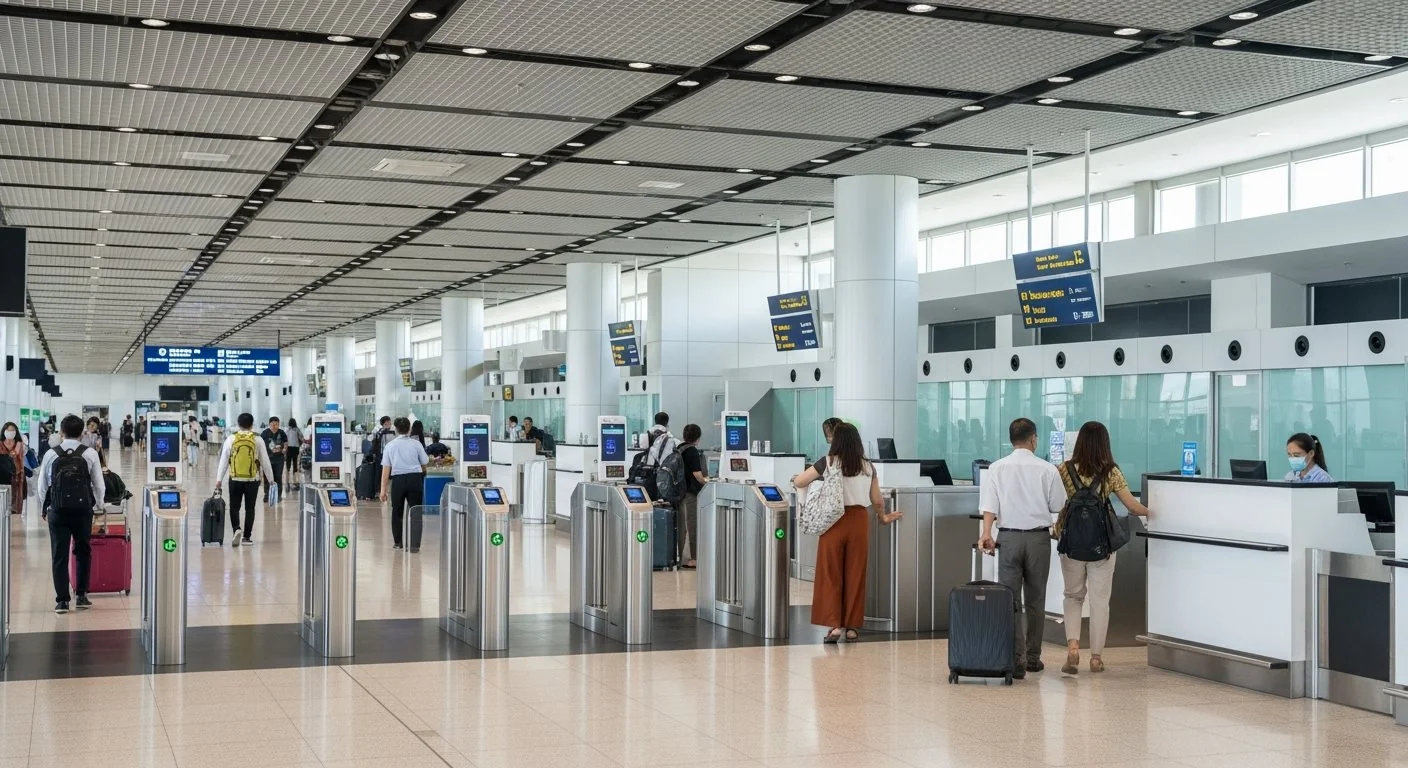
Complete guide to all approved international airports and land border checkpoints where your Cambodia eVisa is accepted for entry.
Apply for Cambodia eVisa NowUnderstanding where you can enter Cambodia with your Cambodia eVisa is crucial for smooth travel planning. The eVisa is accepted at specific designated ports of entry, including major international airports and select land border checkpoints. Not all border crossings accept the eVisa, so it's essential to verify your entry point before traveling.
The Cambodia eVisa system streamlines entry at approved checkpoints, making immigration processing faster and more efficient. This electronic authorization must be presented upon arrival along with your valid passport. Below, you'll find comprehensive information about all approved entry points for eVisa holders.
Three major international airports in Cambodia accept the eVisa for entry
Airport Code: PNH
Also known as Techo International Airport, this is Cambodia's main international gateway located in the capital city. It handles the majority of international flights and offers modern facilities with efficient immigration processing.
Airport Codes: REP/SAI
Also known as Siem Reap Angkor International Airport, this airport serves the famous Angkor Wat temple complex. It's a popular entry point for tourists heading directly to Cambodia's most iconic archaeological site.
Airport Code: KOS
Also known as Preah Sihanouk International Airport, this coastal airport serves the beach town of Sihanoukville. It's ideal for travelers heading to Cambodia's coastal regions and island destinations.
Four designated land border crossings accept the Cambodia eVisa
Border with Thailand
Located in Koh Kong Province, this checkpoint connects Cambodia with Thailand's Trat Province. It's a popular crossing for travelers coming from Thailand's eastern coast and heading to Cambodia's southwestern regions.
This border crossing is ideal for travelers exploring the coastal route between Thailand and Cambodia. Ensure you have your eVisa documentation ready for a smooth crossing.
Border with Thailand
The busiest land border crossing between Cambodia and Thailand, located in Banteay Meanchey Province. It connects with Thailand's Aranyaprathet district and is the main overland route between Bangkok and Siem Reap.
Due to high traffic volume, immigration processing can take longer here. Arrive with plenty of time and have your printed eVisa ready to expedite the process.
Border with Vietnam
Located in Svay Rieng Province, this is the main border crossing between Cambodia and Vietnam. It connects with Vietnam's Moc Bai checkpoint and is the primary overland route between Ho Chi Minh City and Phnom Penh.
This crossing is heavily used by travelers moving between Vietnam and Cambodia. The eVisa application process should be completed before arrival to avoid delays.
Border with Laos
Also known as Trapeang Kriel, this checkpoint in Stung Treng Province connects Cambodia with Laos. It's a quieter crossing point ideal for travelers exploring the less-visited northeastern regions.
This crossing serves travelers on the overland route between southern Laos and Cambodia. It's essential to verify current operating hours before planning your crossing.
Complete overview of where you can enter Cambodia with your eVisa
| Entry Point | Type | Location/Code | Connects With |
|---|---|---|---|
| Phnom Penh International | Airport | PNH / KTI | International flights |
| Siem Reap International | Airport | REP / SAI | International flights |
| Sihanoukville International | Airport | KOS | International flights |
| Cham Yeam | Land Border | Koh Kong Province | Thailand (Trat) |
| Poi Pet | Land Border | Banteay Meanchey | Thailand (Sa Kaeo) |
| Bavet | Land Border | Svay Rieng Province | Vietnam (Tay Ninh) |
| Tropaeng Kreal | Land Border | Stung Treng Province | Laos |
It is mandatory to print two copies of your approved Cambodia eVisa certificate. Black and white copies are acceptable. One copy will be presented to immigration upon entry, and the second copy should be kept for departure.
Although some travelers report that electronic copies on mobile devices may be accepted, it's always safer to carry printed copies to avoid any complications at the border.
Before traveling, confirm that your intended entry point accepts the eVisa. The eVisa is not valid at all Cambodia border crossings, sea ports, or river crossings. Only the seven designated entry points listed above accept the eVisa.
If you plan to enter through a non-supported checkpoint, you will need to obtain a traditional visa from a Cambodian embassy or consulate before traveling.
Your Cambodia eVisa is valid for 90 days from the date of issue, meaning you must enter Cambodia within this timeframe. Once you arrive, you are permitted to stay for a maximum of 30 days.
Review our guide on eVisa validity and permitted length of stay to ensure your travel dates align with your visa authorization.
In addition to your eVisa, immigration officers may request to see supporting documents such as:
Having these documents ready will facilitate a smoother entry process.
It's equally important to know where the Cambodia eVisa cannot be used for entry. The eVisa is not valid at the following types of entry points:
If you must enter through a non-approved checkpoint, you have two alternatives:
Learn more about your options by reading our comparison guide: eVisa vs. Visa on Arrival.
Common questions about using your Cambodia eVisa at ports of entry
No, the Cambodia eVisa is only accepted at specific designated entry points. These include three international airports (Phnom Penh, Siem Reap, and Sihanoukville) and four land border checkpoints (Cham Yeam, Poi Pet, Bavet, and Tropaeng Kreal). If you plan to enter through a different crossing, you will need to obtain a traditional visa or visa on arrival.
It is highly recommended to print two copies of your Cambodia eVisa - one for entry and one for departure. While some travelers report that electronic copies on mobile devices may be accepted, printed copies are safer and officially required. Black and white prints are acceptable. Always carry printed copies to avoid any complications at immigration.
If you arrive at a border crossing that does not accept the eVisa, you will likely need to apply for a visa on arrival if that checkpoint offers this service. Not all border crossings accept eVisas, so it's crucial to verify your entry point before traveling. Some remote crossings may not process any type of visa, so always plan your route carefully and check current entry requirements.
Siem Reap International Airport (REP/SAI) is the best entry point for tourists heading directly to Angkor Wat. The airport is located close to the temple complex and the city of Siem Reap. Alternatively, many travelers fly into Phnom Penh and then take a domestic flight or bus to Siem Reap. Overland travelers often use the Poi Pet border crossing from Thailand.
Yes, you can enter Cambodia at one approved entry point and exit at a different one. For example, you could fly into Phnom Penh International Airport and later exit overland through the Bavet checkpoint into Vietnam. The Cambodia eVisa allows for flexible travel within the country, as long as both your entry and exit points are on the approved list. Remember to keep your second copy of the eVisa for presentation upon departure.
Besides your printed eVisa, you should have the following documents ready:
Check our health requirements guide for current health-related entry requirements.
Get your eVisa approved and enter Cambodia at any of the seven designated entry points. Apply now for fast processing.
Apply for Cambodia eVisa